Central banks plan historic shift from dollar to gold
Central banks are quietly accelerating a reserve rotation out of US Treasuries and into gold, with MSN, KITCO, and 24/7 Wall St. flagging the trend over the past week.
Nathaniel Prescott, Lead Wealth Strategist & Solo Columnist·updated July 03, 2026
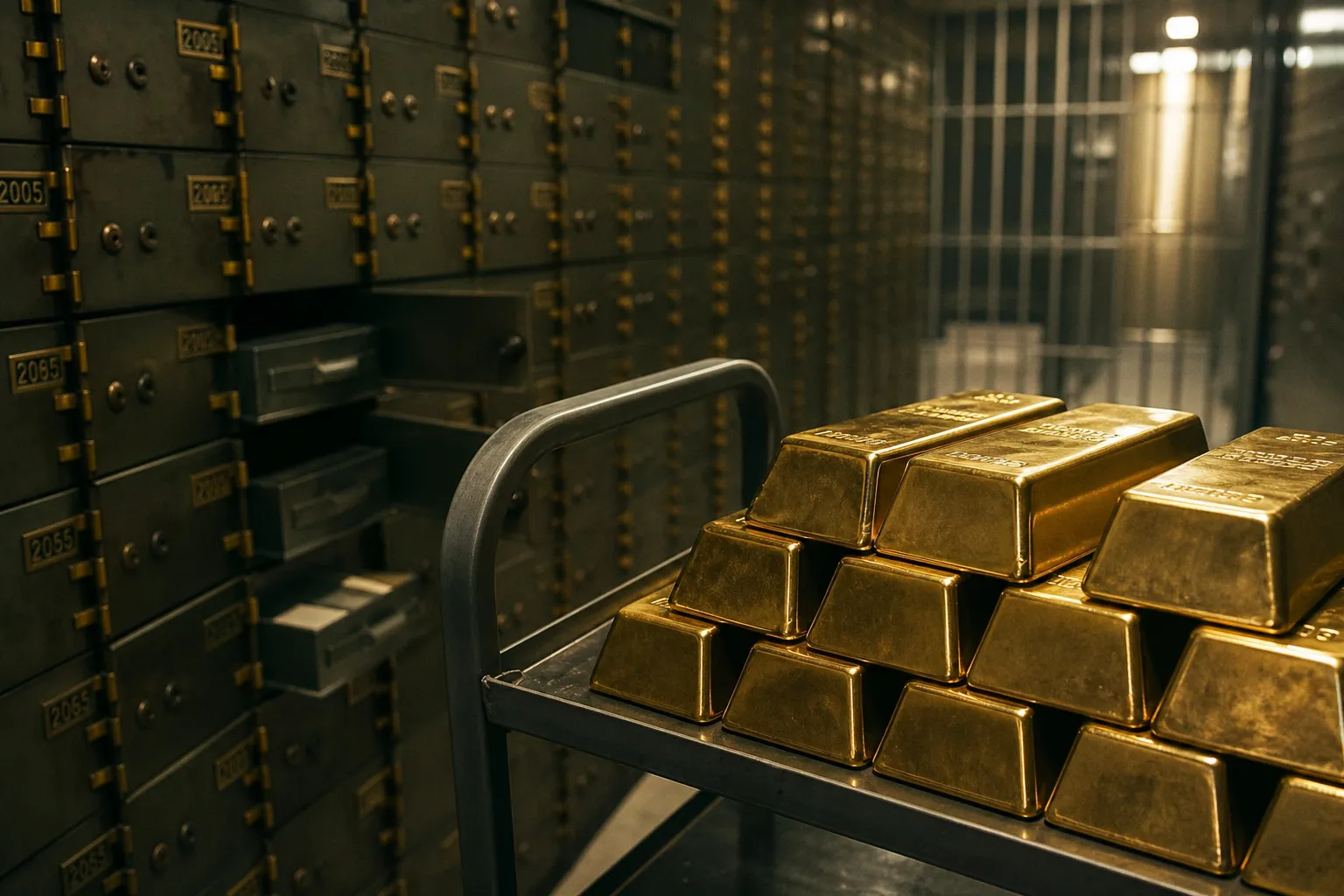
The reserve math
The headlines from 24/7 Wall St. are blunt — "Dumping Treasuries for Gold." Foreign central banks, the marginal buyer of US sovereign debt for decades, are reducing dollar-denominated exposure and accumulating physical gold instead. The logic is mechanical. When the institutions setting global interest rate policy decide that counterparty risk on government bonds outweighs the carry, retail investors are late to the trade by definition, not early.
The implication for your portfolio is asymmetric. If the rotation extends, gold retains structural bid from the largest possible buyers. If it reverses, you own a non-yielding asset with a real opportunity cost against any yield-bearing alternative. We do not yet have published magnitudes or timelines from primary sources — only the headlines — which means position sizing, not conviction, is the lever you pull.
The bubble overlay
Here is where the picture gets uncomfortable. BIS General Manager Pablo Hernández de Cos presented the report's findings with what he called "urgency." The core data point: the five largest hyperscalers are on track to commit more than $1 trillion to AI infrastructure across 2025 and 2026, a pace that outstrips their combined earnings and free cash flow and is forcing heavy borrowing to keep up.
BIS mapped the current cycle against canal mania in the 1830s, Britain's railway mania in the 1840s, electrification in the 1920s, and the dotcom bubble. Each started with a genuine technological breakthrough, attracted more capital than commercial returns could justify, and ended with "an eventual reversal in investment, inducing economy-wide recessions."
The report also flagged "circular financing" — chipmakers and cloud giants taking equity stakes in AI labs that then commit to buying their chips and computing power, effectively recycling capital back to the original investors as revenue. Columbia University economist Stijn Van Nieuwerburgh estimates the total buildout could cost roughly $8 trillion over the next six years, partly financed through off-balance-sheet arrangements that obscure the true cash burn. BIS chief representative for Asia and the Pacific Zhang Tao added that because funding now flows through hedge funds and private credit vehicles rather than regulated banks, an AI unwind could be sharper and faster than a traditional banking crisis.
The portfolio question
We have two signals running simultaneously. Central banks are hedging sovereign credit risk with gold. The central bank of central banks is warning that the AI capex cycle carries the structural shape of past manias. Neither is a trade trigger on its own. Together, they raise the cost of running an unhedged equity book into the back half of 2026.
If you hold concentrated tech or AI-adjacent exposure, the question is not whether the technology matters — it obviously does — but whether your position already prices in the asymmetric downside BIS just described. If your portfolio carries zero allocation to gold or gold ETFs, you are implicitly betting that the reserve rotation is a passing headline. Reasonable people can disagree. "Ignore it" is no longer a defensible default.
Run the if/then. If the BIS scenario plays out and AI-driven capex corrects 30–40%, does your current allocation let you rebalance into the dislocation — or does it force you to sell at the bottom? The answer to that question is your next move.