QuantRate Launches AI Stock Trading Bot to Help Investors Stay Ahead of Market Trends
Sixty percent of U.S. equity volume now executes through algorithms. So when a fintech firm called QuantRate drops a new "AI Stock Trading Bot" into the ring on June 24, 2026, we're not looking at a…
Marcus Thorne, Lead Wealth Strategist & Solo Columnist·updated June 24, 2026
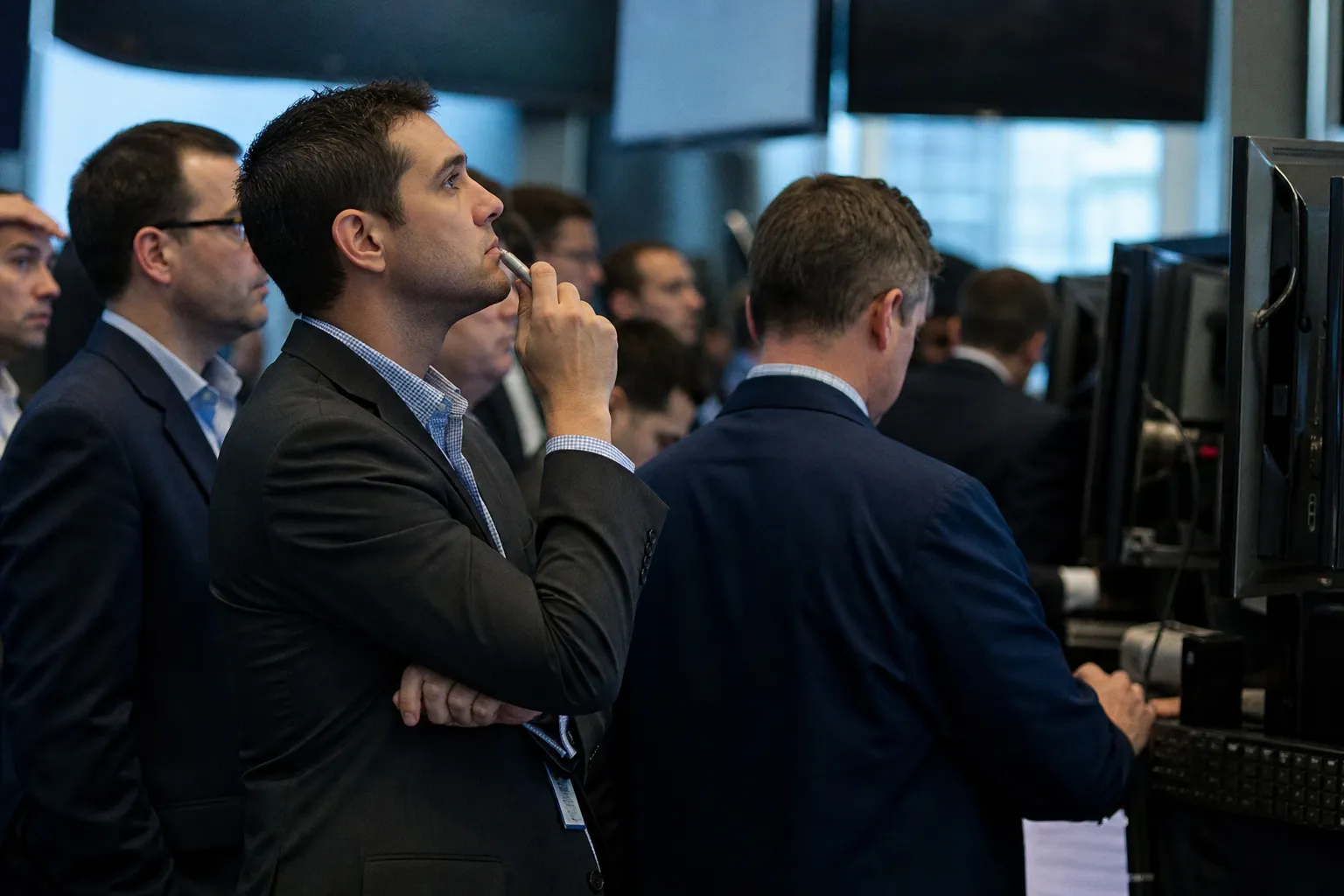
Sixty percent of U.S. equity volume now executes through algorithms. So when a fintech firm called QuantRate drops a new "AI Stock Trading Bot" into the ring on June 24, 2026, we're not looking at a disruption — we're looking at another entrant in a race that's already 90% lapped. The launch lands the same week the Nasdaq shed 2.2% and Alphabet posted its worst session in over a year, and that's not a coincidence. It is the backdrop.
The pitch, stripped down
QuantRate's announcement describes a multi-layer deep learning model that ingests price action, volume, news sentiment, and macro data, then routes signals through a real-time analytics engine to broker interfaces for low-latency execution. The platform claims to handle drawdown limits, volatility targeting, and position sizing automatically. A company spokesperson frames it as democratizing quantitative trading for retail users.
The global algorithmic and AI trading market crossed $23 billion in 2026 and is projected to grow at a CAGR above 8% through 2028, according to the press release. That figure tells us the addressable market is real. It does not tell us whether this particular product captures any of it. There is no published track record, no audited performance data, no third-party verification of the claimed "risk adjustment" engine. The announcement is a marketing event, not a performance event.
The macro fault line you should actually care about
The timing matters more than the product. Two days before the launch, Morgan Stanley estimated AI-related borrowing will surpass $500 billion this year. The same week, Fed signals pointed toward potential rate hikes to fight inflation, and the Guardian reported a global tech rout — South Korea's index closed down 10%, Japan's Nikkei dropped 3.5%, and London held flat. Seven tech stocks now constitute 30% of the S&P 500's value. That concentration is the real trade.
If you are considering an AI bot right now, you are not buying a tool. You are buying exposure to a narrow sector at a moment when rates may rise, valuations are stretched, and capital expenditure across AI infrastructure is being financed by debt. An algorithm that reads sentiment and news flow will process the same noise you are processing — only faster. Faster is not the same as better.
What to verify before you wire money
Before you allocate a single dollar to any retail AI trading platform, we want the following on paper: audited backtest results across at least one full market cycle including a drawdown period; a clear description of the data inputs and how the model weights news sentiment versus price action; disclosure of fees, slippage assumptions, and the broker's execution quality; and regulatory status in your jurisdiction. The announcement offers none of these.
The opportunity cost of a black box is simple. You surrender discretion to a model whose edge you cannot evaluate. In a market where 60% of volume is already machine-driven, your edge is not speed. Your edge is capital allocation discipline, position sizing under stress, and the willingness to sit in cash when the math doesn't work. No bot on a landing page replicates that.
We are not opposed to automation. We are opposed to buying a strategy because a press release said it works.