Nathaniel Prescott, Lead Wealth Strategist & Solo Columnist
July 11, 2026 · 15 min read
Silver gold investing: why silver ruins your gold hedge
Silver can run 25% to 35% annualized volatility while gold usually sits closer to 12% to 15%. That single spread is enough to break most “precious metals hedge” arguments before the sales pitch reaches the second slide.
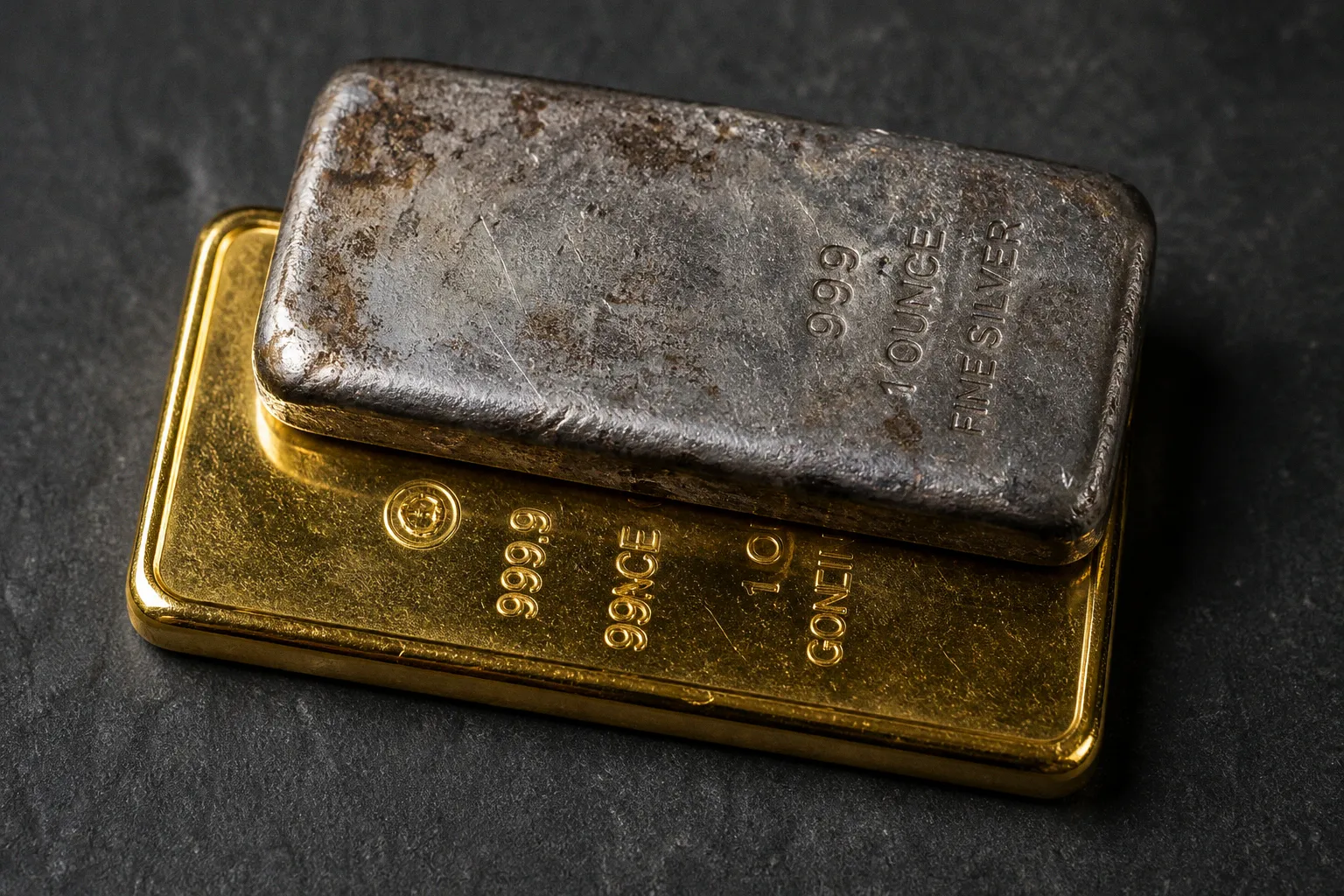
Silver gold investing sounds clean. Own both metals. Diversify your hard assets. Capture monetary insurance from gold and upside from silver. Wall Street loves this packaging because it turns one simple portfolio role into a product menu. The problem is mechanical, not philosophical. Gold and silver do not respond to the same forces with the same intensity. Gold is primarily a monetary asset. Silver is roughly half industrial input. That means when you buy both as if they are interchangeable hedges, you are not improving the hedge. You are contaminating it with manufacturing beta.
That matters when the hedge is supposed to work. Nobody needs a hedge that behaves well during calm conditions and folds when global growth shocks hit. We need to know what happens when credit tightens, factories slow, liquidity gets pulled, and investors start selling what they can rather than what they want. Gold has a long record as a store of value in that environment. Silver often acts like a leveraged commodity with a precious-metals costume.
The fundamental divergence: monetary store versus industrial commodity
Gold’s portfolio job is narrow. That is a feature.
It does not generate cash flow. It does not compound earnings. It does not ship product. It sits outside the operating economy and absorbs distrust. When real yields fall, currencies weaken, central banks accumulate reserves, or investors start questioning financial plumbing, gold has a clean reason to exist. It is monetary ballast.
Silver is different. It has monetary history, yes. But today its demand stack is heavily industrial. Roughly 50% to 60% of annual silver demand comes from industrial applications: electronics, solar panels, automotive components, electrical contacts, and adjacent manufacturing channels. That demand can be bullish in an expansion. It can also be viciously pro-cyclical.
So the first error in silver gold investing is assuming both metals hedge the same risk. They do not.
Gold hedges monetary disorder better because monetary disorder is central to its demand case. Silver has to carry two identities:
- a precious metal narrative that attracts investors during inflation scares;
- an industrial commodity reality that exposes it to production cycles;
- a smaller, thinner market structure that amplifies flows;
- a speculative profile that attracts momentum capital at precisely the wrong time.
This is not a moral judgment. Silver is not “bad.” It is simply not gold. If you buy silver for asymmetric upside, fine. Call it that. If you buy it as part of a precious metals hedging strategy, you need to admit what you are adding: volatility, cyclicality, and a higher probability of drawdown during growth stress.
A hedge should reduce the number of things that must go right. Silver usually increases them.
Gold’s cleaner role is why central banks hold it as a reserve asset. It is also why portfolio allocators treat gold differently from copper, nickel, lithium, or silver. Industrial usefulness is not automatically an investment advantage. Sometimes it is the thing that turns your hedge into a growth-sensitive position.
That distinction becomes brutal during recessions. In a global slowdown, industrial demand contracts. Manufacturing orders weaken. Inventory cycles reverse. Silver gets hit through the same channel that hits other industrial commodities. Gold may also sell off during liquidity panics, especially when investors need cash. But its core demand base is less dependent on whether factories are running at full utilization.
That is the divergence. Gold is a claim on monetary distrust. Silver is a claim on monetary distrust plus industrial throughput. The second component is not free.
Volatility profiles: why silver’s beta disrupts portfolio stability
Volatility is not just a number for risk reports. It dictates position sizing. It dictates emotional behavior. It dictates whether a hedge actually survives inside a portfolio.
Gold’s annualized volatility typically runs around 12% to 15%. Silver’s often runs around 25% to 35%. That is not a rounding error. That is a different asset class behavior.
If we put $10,000 into gold and $10,000 into silver, we have not created two equal precious metal positions. We have created one calmer monetary hedge and one high-beta commodity sleeve. The dollar allocation may look balanced. The risk allocation is not.
Here is the cleaner way to see it:
| Portfolio role | Gold | Silver |
|---|---|---|
| Typical annualized volatility | 12%–15% | 25%–35% |
| Main demand driver | Investment demand, central bank reserves, monetary confidence | Industrial demand plus investment/speculation |
| Behavior in growth stress | Often more defensive, though not immune to liquidity selling | More exposed to manufacturing slowdown |
| Hedge purity | Higher | Lower |
| Best use case | Store of value, monetary insurance | Tactical commodity exposure, speculative upside |
| Main portfolio problem | No yield, opportunity cost during risk-on markets | Drawdowns can overwhelm the hedge function |
This is where the standard gold and silver portfolio ratio becomes misleading. A 50/50 allocation by dollars is not balanced. It is tilted toward silver risk. Even a 70/30 gold-silver split can carry more silver influence than the dollar weights suggest because silver moves harder.
Let’s strip this down.
Assume gold volatility at 14%. Assume silver volatility at 30%. If you allocate 80% to gold and 20% to silver, silver still contributes materially to total metal-basket volatility. If correlations rise during stress — and correlations often rise when investors de-risk — the silver sleeve can dominate the emotional experience of the position.
That is the real portfolio risk. Not just the spreadsheet drawdown. The behavioral drawdown.
Investors buy gold to sleep better. Then they add silver and start watching intraday commodity swings. They have imported a different game. The portfolio now depends on whether the investor can tolerate a metal that can move like an equity beta instrument while being marketed as a store of value.
Most cannot. They sell at the wrong time. Or they size it too large. Or they keep averaging down because the gold-to-silver ratio “looks stretched.” That last mistake deserves its own autopsy.
The gold-to-silver ratio is not a valuation oracle
The gold-to-silver ratio measures how many ounces of silver it takes to buy one ounce of gold. Historically, it has moved widely, often in the 50:1 to 90:1 range, and at times beyond that. During the COVID shock in 2020, it reached a historic peak near 120:1.
The ratio is useful. It is not magic.
When silver promoters show a high ratio, the argument usually goes like this: silver is cheap relative to gold; the ratio will revert; buy silver before the catch-up trade. Sometimes that works. Often enough, it works violently. That is why the narrative survives.
But a ratio is not a law. It is a price relationship between two assets with different drivers. If silver is weak because industrial demand is impaired, the ratio can stay high for longer than a leveraged investor can tolerate. If gold is strong because monetary demand is rising while factories are weakening, the ratio can widen for rational reasons.
A high gold-to-silver ratio may indicate silver is depressed. It may also indicate that the market is pricing silver’s industrial exposure correctly.
That is the part the pitch deck leaves out.
The ratio can help frame relative value only if we first answer three questions:
1. What is driving gold? If gold is rising on central bank buying, currency distrust, or real-rate pressure, silver may not deserve to follow at the same pace.
2. What is driving silver? If silver is moving on industrial demand from solar, electronics, or automotive channels, it is not behaving as a pure monetary hedge.
3. What regime are we in? In an expansion with strong manufacturing momentum, silver can outperform gold. In a recessionary shock, that same beta can punish the portfolio.
The ratio is a thermometer. It is not a trading system. It tells us there is a temperature difference. It does not diagnose the disease or prescribe the dose.
There is another problem. Ratio-based silver buying often ignores opportunity cost. Capital placed into silver for “mean reversion” is capital not held in gold, Treasury bills, productive equities, or cash reserves. If the mean reversion takes years, the apparent discount can become a yield drag.
That is the adult version of the conversation. Not “silver must return to some old ratio.” Not “silver is gold on sale.” Silver can be cheap and still be the wrong hedge.
Precious metals correlation is not the same as hedge reliability
Gold and silver often move together enough to look related on a chart. That is the trap. Correlation does not equal substitutability.
Two assets can share direction during benign markets and diverge under stress. That is exactly when the hedge distinction matters. If your portfolio is falling because growth expectations are being revised down, silver’s industrial demand channel can become a liability. Gold’s monetary channel may cushion more effectively.
This is why we should not treat precious metals correlation as a static input. Correlations are regime-dependent. They change with inflation expectations, real yields, dollar strength, liquidity, industrial demand, and speculative positioning.
Currency context also matters. Gold is often discussed against the U.S. dollar, but cross-currency pressure can change how non-dollar investors experience the metal. For readers who want a narrower currency-market angle, the five-year data on EUR/USD correlation with gold is a useful reminder that gold’s behavior cannot be reduced to a single domestic inflation narrative.
Silver adds another layer. It is affected by the dollar and real rates, but also by manufacturing demand. That gives it more variables. More variables mean more ways for the hedge to misfire.
Let’s run the if/then logic.
If the market is worried about currency debasement and industrial demand remains strong, silver can do very well. It can outperform gold. That is the bull case.
If the market is worried about recession, credit stress, or falling industrial output, silver can sell off while gold holds better. That is the hedge problem.
If liquidity is being pulled from speculative markets, silver can suffer from positioning and thinner market depth. Gold can also decline in forced selling, but it has deeper institutional sponsorship.
If green-energy demand continues to support silver usage, that may improve long-term demand. It does not remove cyclical volatility. Solar demand is still demand inside the real economy. It is not a central bank reserve function.
This is where investors confuse a secular story with portfolio behavior. A commodity can have a strong ten-year demand narrative and still be a poor hedge next quarter. Both can be true. Wealth building requires holding both truths at once.
Basel III and the institutional anchor gold has that silver does not
Gold has institutional status that silver lacks. Under Basel III, gold is classified as a Tier 1 asset. That reinforces its role in bank balance sheets and reserves. Silver does not share that status.
This is not decorative trivia. Institutional classification affects demand quality.
Central banks do not accumulate silver the way they accumulate gold. Banks do not treat silver as equivalent reserve ballast. Sovereign monetary systems do not look to silver as the same settlement-neutral asset. Gold occupies that strange niche: no yield, no credit risk, no issuer, deep global recognition, and institutional legitimacy.
Silver has uses. Many of them are economically important. But usefulness is not the same as reserve quality.
For a portfolio hedge, that distinction matters because institutional demand tends to be less speculative than retail demand. Gold has buyers who are not simply chasing price. Central banks may buy for reserve diversification, geopolitical insulation, or long-horizon monetary reasons. Those buyers can be insensitive to short-term price noise.
Silver’s demand base is more mixed. Industrial users care about input cost and supply. Investors care about price. Speculators care about momentum. That makes silver more reflexive. Price moves attract flows, flows exaggerate price moves, and then the unwind becomes part of the asset’s behavior.
Gold is owned for what can go wrong in the financial system. Silver is often owned for what can go right in the industrial economy.
That sentence should sit at the center of any silver vs gold volatility discussion.
If you want a hedge against monetary disorder, gold is cleaner. If you want exposure to industrial demand with a precious metal kicker, silver is plausible. But mixing those roles without naming them creates portfolio mud.
The industrial trap: green demand does not cancel cyclicality
The strongest modern argument for silver is industrial demand. Electronics need it. Solar panels use it. Automotive systems use it. Green-energy buildout has kept the demand story alive through 2023 and 2024. That is real.
It is also not a hedge argument.
Industrial demand can raise the long-term floor for an input. It can tighten supply-demand balances. It can produce price spikes when inventories are thin. But it does not make the asset defensive. In fact, it often does the opposite. It ties the asset more directly to capital expenditure cycles, manufacturing health, and end-market demand.
A solar-driven silver thesis is not the same as a gold hedge thesis. It is closer to a commodity demand thesis.
That matters for sizing. A silver position should be treated more like a tactical alternative asset or commodity allocation than a core monetary hedge. The mistake is not owning silver. The mistake is financing silver by reducing the part of the portfolio that was supposed to protect you from macro stress.
Here is a practical distinction:
| Investor objective | Better fit | Why |
|---|---|---|
| Preserve purchasing power through monetary stress | Gold | Cleaner monetary demand and institutional reserve status |
| Speculate on industrial demand and supply tightness | Silver | Higher beta to manufacturing and green-energy usage |
| Reduce equity drawdown sensitivity | Gold | Lower volatility and less direct exposure to industrial cycles |
| Seek asymmetric upside in a metals bull market | Silver | Smaller market and higher volatility can amplify gains |
| Build a conservative precious metals sleeve | Mostly gold | Silver can disrupt the sleeve’s defensive profile |
The table is blunt because the decision should be blunt. If your objective is hedge reliability, silver should be small or absent. If your objective is upside, silver can have a role, but it belongs in the risk bucket, not the insurance bucket.
Investors hate that distinction because it forces a trade-off. They want gold’s defensive reputation and silver’s upside in one allocation. Markets rarely hand out that combination for free. The price of silver’s upside is higher drawdown risk. The price of gold’s stability is lower explosive potential and no yield.
Pick your cost.
What a disciplined metals allocation should actually do
We do not need an ornate framework. We need clean portfolio accounting.
Start by separating the metals sleeve into two labels:
1. Monetary hedge capital. This is capital intended to hold value when confidence in fiat, banks, real yields, or liquidity conditions deteriorates.
2. Commodity/speculative capital. This is capital intended to benefit from industrial demand, supply squeezes, momentum, or relative-value trades.
Gold belongs mostly in the first bucket. Silver belongs mostly in the second.
Once you do that, the allocation conversation becomes more honest. A conservative investor may own gold and no silver. A more aggressive investor may own gold as the anchor and silver as a satellite. A tactical investor may trade the gold-to-silver ratio, but should not pretend the ratio removes risk.
A serious precious metals hedging strategy should answer these points without marketing language:
- What risk is the metal supposed to hedge? Inflation, currency debasement, banking stress, equity drawdowns, or commodity supply tightness are not the same risk.
- What will cause the position to fail? Gold can underperform when real yields rise and risk appetite is strong. Silver can fail when industrial demand weakens or speculative flows reverse.
- How much volatility can the portfolio absorb? A 30% volatility asset cannot be sized casually inside a defensive sleeve.
- Which bucket funds the purchase? If silver comes out of the gold allocation, you are reducing hedge purity. If it comes out of the speculative commodity allocation, the trade is at least labeled correctly.
- What is the exit discipline? Silver mean-reversion trades need rules. Hope is not a risk-management system.
Notice what is missing: a universal gold and silver portfolio ratio. There is no sacred number. A 90/10 split may be too much silver for a retiree using gold as insurance. A 70/30 split may be reasonable for a commodity-focused investor who accepts drawdowns. A 100/0 gold allocation may be the cleanest answer for someone who only wants monetary ballast.
The ratio should follow the job. Not the other way around.
The final portfolio choice
Silver gold investing fails when investors buy a slogan instead of an asset behavior. Gold and silver share a shelf in the precious metals aisle. They do not share the same portfolio function.
Gold is imperfect. It has no yield. It can lag for long stretches. It can frustrate anyone measuring success by quarterly performance. But as a hedge, its simplicity is the point. It is a monetary asset with deep institutional recognition and lower volatility than silver.
Silver is useful, volatile, and potentially explosive. It can outperform dramatically in the right cycle. It can also drag a defensive allocation into the industrial cycle at the exact moment you wanted protection from economic stress.
So the decision is binary.
If you want a cleaner hedge, own gold and keep silver on a short leash. If you want higher-beta commodity upside, own silver honestly and stop calling it insurance. Mixing the two without separating their jobs is not diversification. It is sloppy risk budgeting with a shiny label.